Selling PC Components Online: What Works in 2026
The PC components market is large, competitive, and technically demanding. Customers are often knowledgeable — they know what they want, they know the specs, and they're comparison shopping across multiple stores.
To win in this market, you need more than low prices. You need an experience that builds trust, reduces friction, and makes buying the whole build (not just one part) the obvious choice.
Here are the best practices we've seen work across PC stores on Shopify.
1. Make Compatibility Your Selling Point
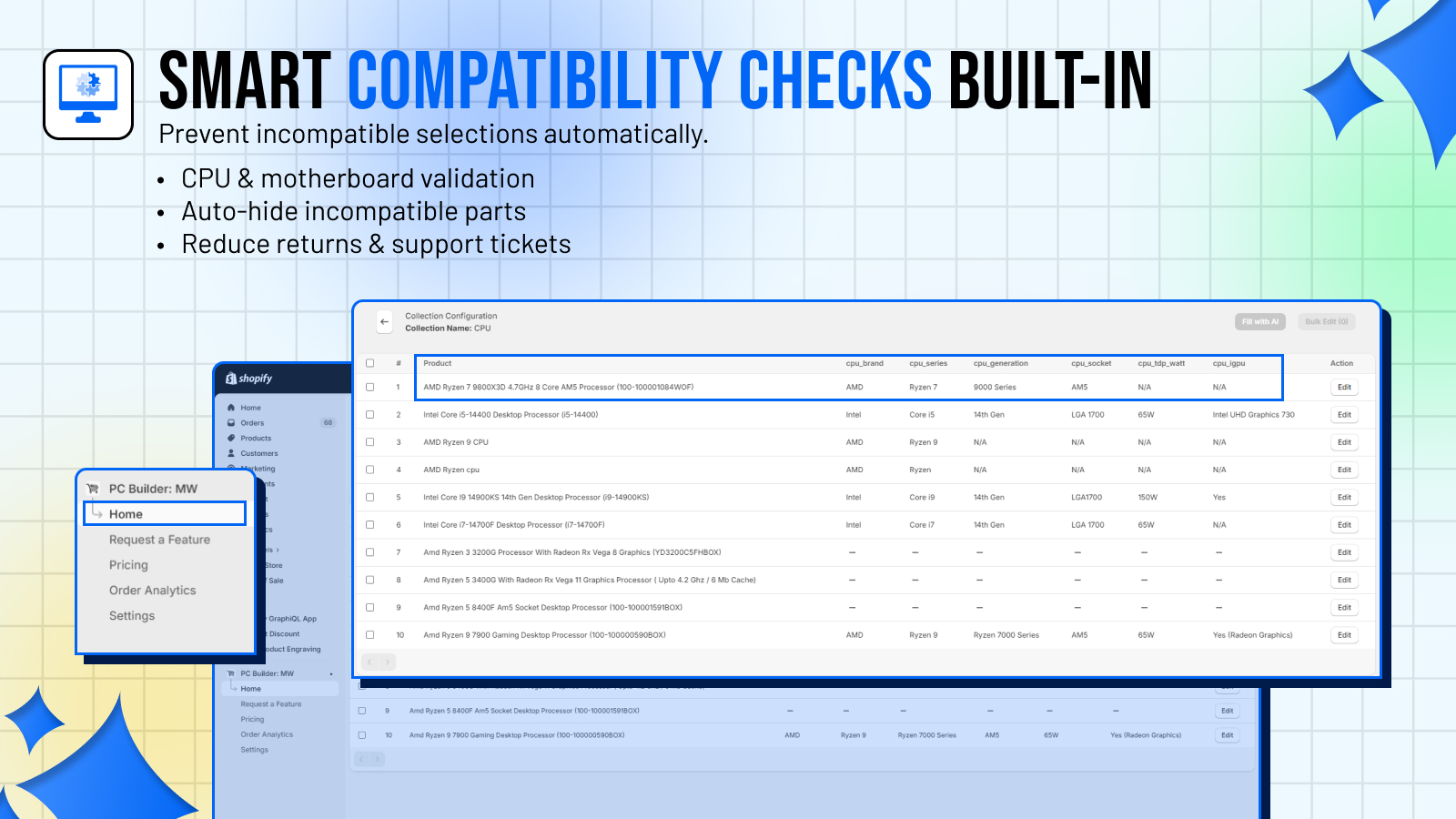
Most PC parts stores just list parts. They don't tell you what works together. This leaves customers doing compatibility research on third-party sites (PCPartPicker, manufacturer spec sheets) — and potentially buying from whoever shows up in that research.
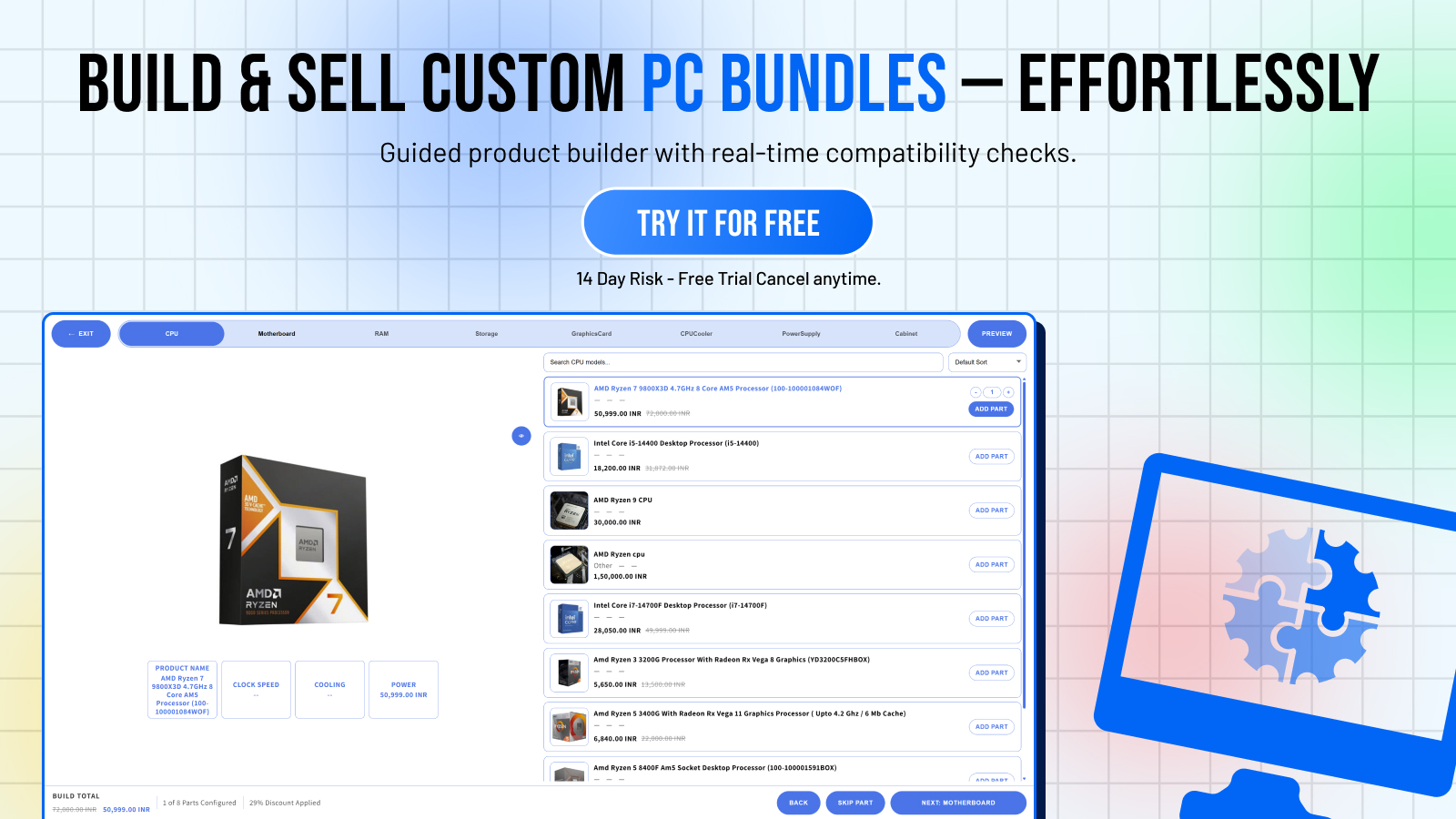
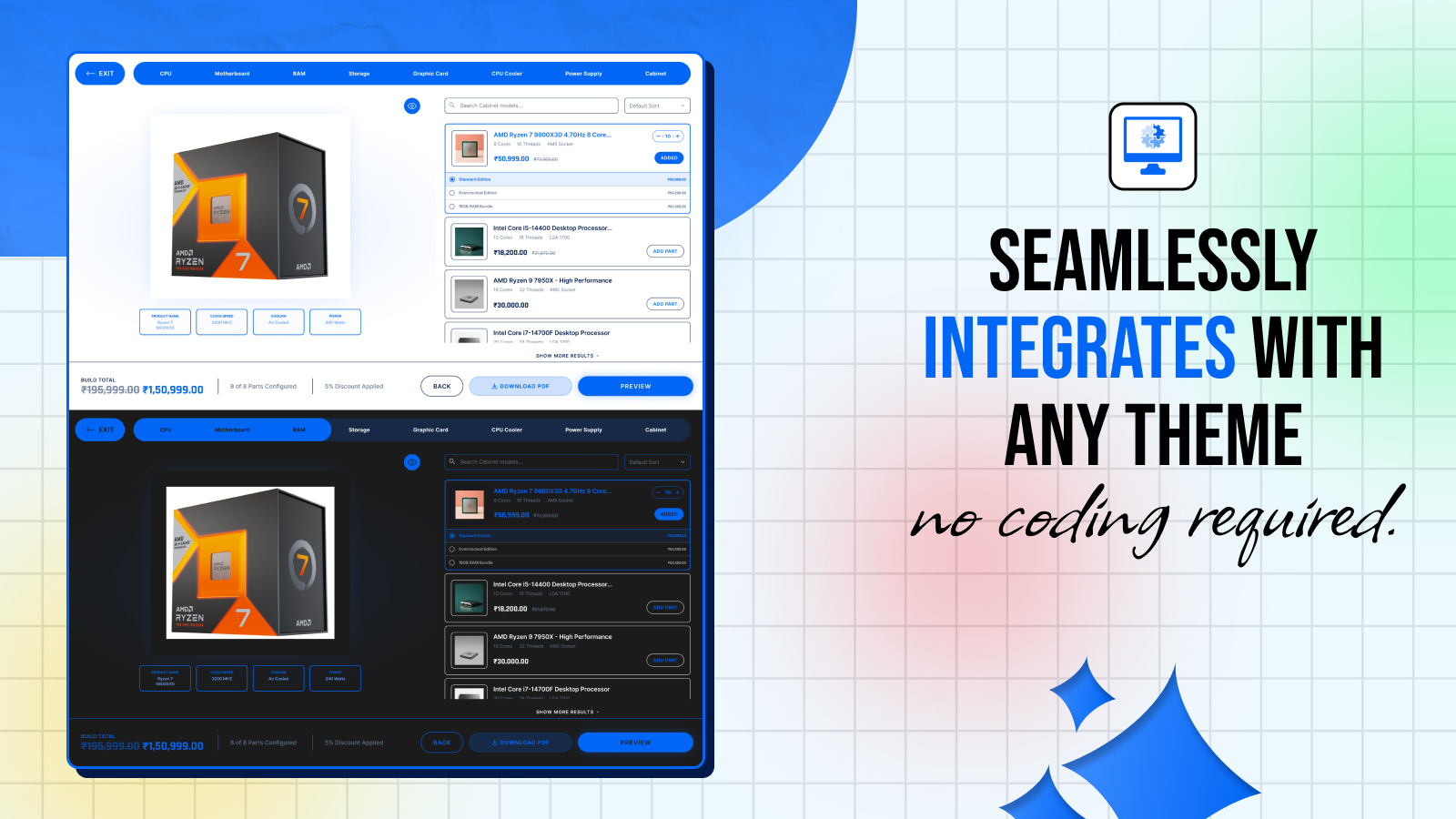
Flip this: make compatibility checking a feature of your store. Use PC Builder MW to embed a compatibility-aware configurator. Customers who can configure a full build and buy it all in one place — without leaving your store — convert much better.
Market this explicitly: "Compatible PC builds, guaranteed" or "We check compatibility so you don't have to."
2. Invest in Product Data Quality
PC parts have a lot of specs. Customers look at TDP, socket type, memory speed, form factor, wattage. A product page that's missing this information loses sales to a competitor with complete specs.
Use PC Builder MW's AI fill to populate spec data faster. Then review and edit for accuracy — AI gets it right most of the time, but spot-check high-value SKUs.
Good product data also helps SEO. Google surfaces product pages that have complete specifications, structured data, and good content.
3. Price Competitively but Don't Race to the Bottom
PC components are highly price-sensitive for budget builds. But for mid-range and enthusiast builds, customers are more willing to pay a small premium for:
- A better experience (configurator, compatibility checking)
- Better support (fast, knowledgeable responses)
- Trust and reliability (reviews, clear return policy)
Compete on price for popular budget SKUs. Compete on experience for mid-range and above.
4. Build for Pre-Purchase Trust
First-time visitors who don't know your store need trust signals before they buy. Include:
- **Reviews**: Especially important for PC parts. Make it easy for customers to leave reviews, respond to all reviews (especially negative ones).
- **Return policy**: Clear, fair return policy for compatible issues. Some stores offer "compatibility guarantees" — if parts you bought together don't work, they'll cover the return.
- **Specifications and photos**: High-quality product images and complete technical specs.
- **Security badges**: SSL, Shopify secure payments, trusted payment methods.
5. Create Build Content, Not Just Product Pages
The most effective content for PC stores isn't product reviews — it's build guides. "Best gaming PC under $1000 for 2026" with specific product recommendations and links drives high-intent traffic that converts.
Create:
- Monthly "best build" roundups at different price points
- Use-case guides (gaming, streaming, video editing, 3D rendering)
- Component comparison posts (when a new product launches)
- How-to guides (CPU installation, thermal paste application, RAM overclocking)
This content drives organic traffic, builds topical authority, and every article links back to the products or the configurator.
6. Leverage the PC Community
The PC enthusiast community is active on Reddit (r/buildapc, r/hardware, r/pcmasterrace), YouTube, Twitch, and Discord. These communities have strict rules against overt promotion — but they love quality content and genuine participation.
Ways to engage without spamming:
- Share genuinely useful build guides on relevant subreddits
- Answer "can I use this with that?" questions with links to your configurator
- Partner with PC-focused YouTubers for product reviews (paid partnerships disclosed)
- Host giveaways in PC communities
7. Handle Support Well
PC customers have technical questions. The ones you handle well become loyal repeat buyers. The ones you handle badly leave negative reviews and warn their community.
Build a support operation that:
- Has actual technical knowledge (hire people who build PCs)
- Responds within 24 hours (ideally 4–8 hours during business days)
- Has documented answers to common questions (FAQ, knowledge base)
- Proactively follows up on orders with high risk of issues
PC Builder MW reduces the volume of compatibility support tickets significantly — but you'll still get questions about shipping, returns, and build advice.
8. Think Beyond Single-Purchase Customers
The PC market has natural upgrade cycles. Customers who buy a CPU today will buy a new GPU in 6 months, more RAM in a year, a new case eventually.
Capture repeat purchase intent:
- Get email opt-ins at purchase (with a clear value proposition — build tips, new product alerts)
- Segment by what they bought and when
- Send relevant upgrade suggestions as new products launch
- Create a loyalty program or member pricing for repeat customers
Summary
The best PC stores on Shopify combine:
- A great catalog with complete specs
- A compatibility-aware configurator (PC Builder MW)
- Competitive pricing on popular SKUs
- Strong trust signals and reviews
- Build-focused content that drives organic traffic
- Technical, responsive support
- Email marketing for the upgrade cycle